
Q2 2026 Retail Earnings Brief
The Digital Shelf Is Becoming More Valuable, and More Competitive
Parallel Research | August 2026
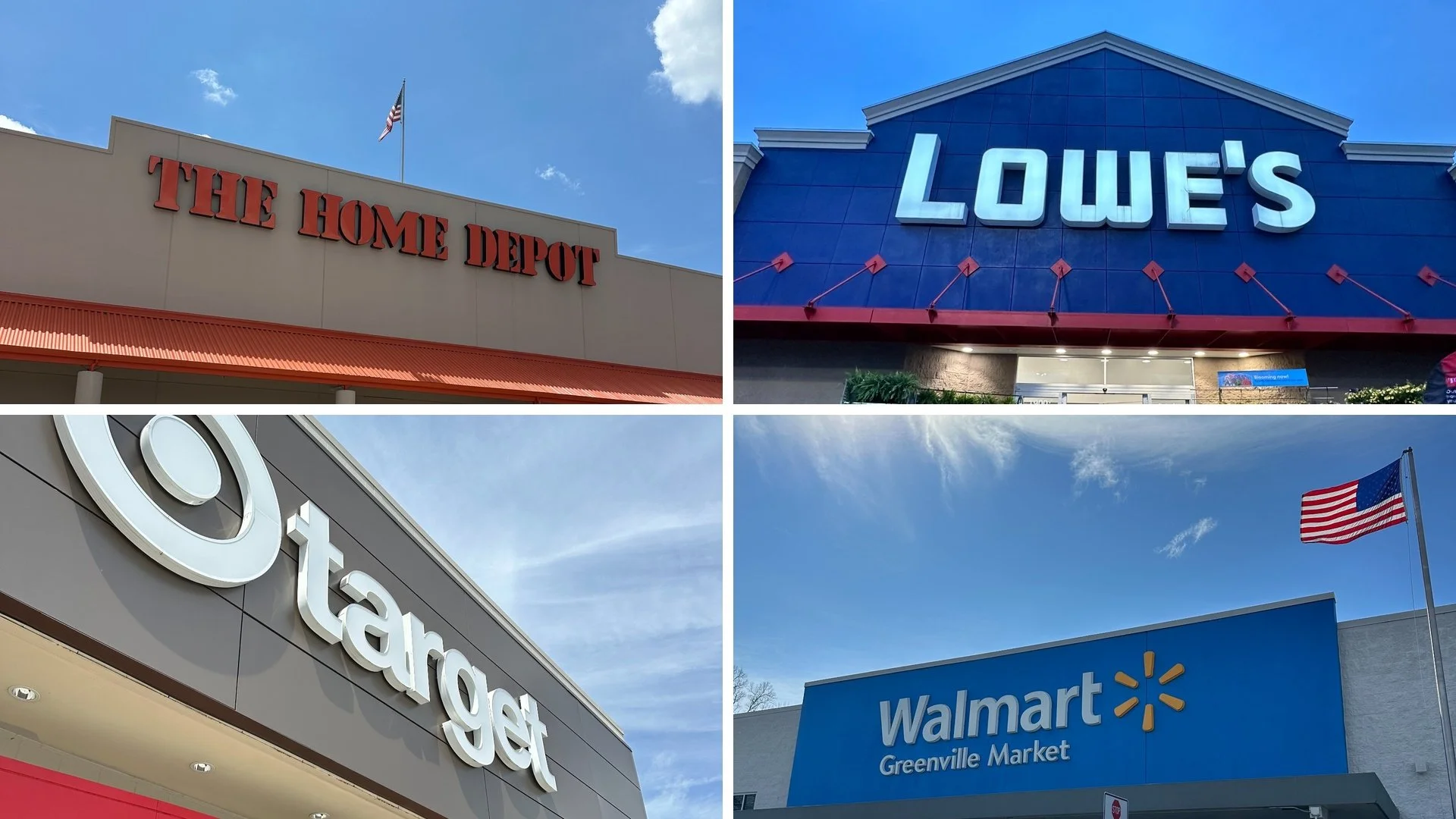
Home Depot, Lowe's, Target and Walmart reported earnings within a 72-hour window in August.
Taken individually, the results tell four different stories. Taken together, they point toward a broader shift in retail: digital commerce, convenience and retail media are becoming increasingly important components of the retailer business model.
For brands, that has an important implication.
Getting onto the digital shelf is no longer enough. Winning there is becoming harder, and more valuable.
Four Retailers. One Direction.
The topline numbers were generally positive, although the underlying businesses performed differently.
Home Depot reported Q2 sales of $47.9 billion, up 5.7%, while comparable sales increased 1.7%. Management pointed to broad-based demand and continued engagement in smaller home improvement projects.
Lowe's generated $26.0 billion in quarterly sales. Comparable sales increased just 0.2%, but online sales increased 15.7%, with Lowe's identifying Pro, Online and Home Services as key areas of strength.
Target reported net sales growth of 5.3% and comparable sales growth of 3.8%. Store comparable sales increased 2.7%, while digitally originated comparable sales grew 8.7%. Same-Day Delivery grew more than 25%.
And then there's Walmart. Global ecommerce grew 23%, Walmart U.S. ecommerce grew 24%, and store-fulfilled delivery increased 40%. Walmart also reported more than 50% growth in U.S. marketplace net sales.
The stores aren't disappearing. Quite the opposite. Stores are increasingly becoming part of the digital infrastructure.
The Store vs. Ecommerce Debate Is Becoming Less Useful
One of the easiest mistakes to make when looking at retail data is treating ecommerce and brick-and-mortar as competing businesses.
Increasingly, they're interconnected parts of the same commerce system.
Target is a useful example. Digitally originated sales represented 19.6% of merchandise sales during the quarter, yet 97.6% of merchandise sales were fulfilled by stores when in-store transactions and digital orders fulfilled through stores are combined.
Walmart tells a similar story. Store-fulfilled delivery grew 40% during Q2 as ecommerce continued expanding.
The consumer doesn't necessarily distinguish between ecommerce and physical retail the way the industry historically has.
A shopper can discover a product through an ad, research it on a retailer's website, compare it against competing products, order it through an app and have the item fulfilled by the store down the street.
That's one transaction spanning multiple pieces of the retail ecosystem.
For brands, that means the digital shelf isn't simply an ecommerce sales channel. It's increasingly part of the infrastructure influencing the entire purchase journey.
Retail Media Is a Business of Its Own
The other number that deserves attention is advertising.
Walmart's global advertising business grew 38% during the quarter. Walmart Connect in the U.S. grew 43%, excluding VIZIO.
Target's advertising revenue reached $279 million for the quarter, up from $217 million a year earlier, roughly 29% year-over-year growth. Target also reported that overall non-merchandise sales grew more than 20%, driven in part by its Roundel advertising business.
This isn't ancillary revenue anymore. Retailers increasingly sit on something extraordinarily valuable: first-party purchase behavior.
They know what customers search for, what they purchase, when they purchase it and, in many cases, how advertising exposure ultimately connects to the transaction.
That creates an attractive advertising proposition for brands and an increasingly important profit stream for retailers.
Walmart's recent activity makes the direction particularly clear. The company has described an advertising vision spanning digital, physical stores, marketplaces, connected TV and offsite media, supported by its first-party commerce signals.
Brands should expect retail media to command an increasingly significant share of the commerce marketing budget.
But there's a catch.
More Traffic Doesn't Fix a Weak Digital Shelf
Retail media solves a traffic problem. It doesn't necessarily solve a conversion problem.
A sponsored placement can put a product in front of the right shopper. It can generate the click. It can get that shopper onto the product detail page. Then the PDP has to do its job.
Consider what happens next.
A shopper may be comparing four or five products simultaneously. They're evaluating price, reviews, specifications, dimensions, features, compatibility, use cases and dozens of other signals.
The brand has seconds to answer a relatively simple question:
Why should I buy this one?
If the PDP doesn't communicate that answer clearly, additional media investment can simply purchase more traffic to an experience that isn't converting efficiently.
That is why we believe brands should increasingly think about:
Media → Content → Conversion as one connected system. Not three separate disciplines owned by three separate teams.
The New Digital Shelf Is a Performance Asset
Historically, product content has often been treated as a merchandising requirement.
Get the images uploaded. Complete the copy. Fill out the attributes. Add a video if the budget allows. Publish.
That mindset becomes increasingly difficult to justify as retailers build more sophisticated media businesses around the same digital shelf.
If a brand is spending tens or hundreds of thousands of dollars generating traffic to retailer PDPs, the quality of those PDPs becomes part of media performance.
Better product content can help shoppers understand the product.
Better comparison content can communicate differentiation.
Better imagery can reduce uncertainty.
Better video can demonstrate functionality that static copy cannot.
Better content doesn't guarantee conversion.
But media efficiency and PDP effectiveness shouldn't be evaluated independently.
The landing experience is part of the investment.
What Brands Should Be Asking
The Q2 numbers raise a different set of questions than simply, How fast is ecommerce growing?
Brands should be asking:
Are our retailer PDPs actually prepared for the traffic we're paying to generate?
Are retail media, ecommerce and creative teams looking at the same performance data?
Which content elements correlate with stronger conversion within our category?
How does our digital shelf compare with the brands winning share at each retailer?
Are we measuring brand performance against category and retailer growth, or simply celebrating topline growth?
That final question matters.
A rising retailer can make a lot of brands look successful simultaneously.
If retailer traffic increases and category demand increases, a brand can grow while still losing relative ground.
The better question isn't simply: Did we grow?
It's: Did we outperform the environment we were operating in?
Our Take
Q2 wasn't evidence that physical retail is giving way to ecommerce.
It was evidence that the distinction between the two continues to erode.
Stores are becoming fulfillment infrastructure.
Retail websites are becoming media platforms.
Retail media networks are becoming meaningful businesses.
And product detail pages increasingly sit at the intersection of discovery, consideration and conversion.
The opportunity for brands isn't simply to spend more on retail media or produce more digital content.
It's to connect the two.
The brands that treat media, creative, digital shelf data and conversion as one system will have an advantage over those still managing them in silos.
That's the shift we're watching.
About Parallel Research
Parallel Research examines the forces reshaping the digital shelf, retail media and commerce, and translates them into practical implications for brands.
Sources: Q2 2026 earnings releases and materials from Home Depot, Lowe's, Target and Walmart.